Tengizchevroil is a leading company that produces oil, gas and associated products that fuels the modern economy. Our history is closely interlinked with the rise of an independent Kazakhstan.
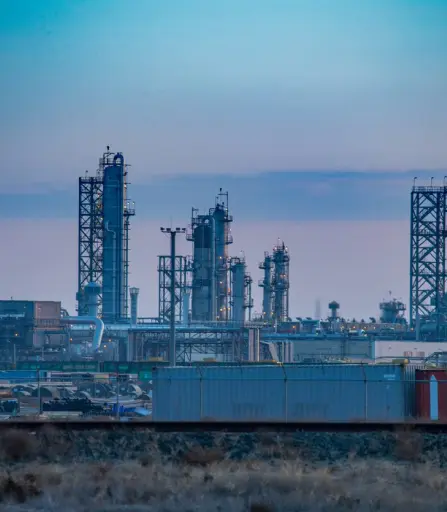
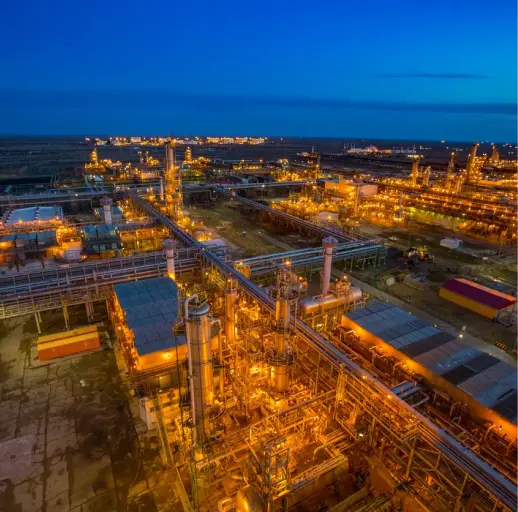
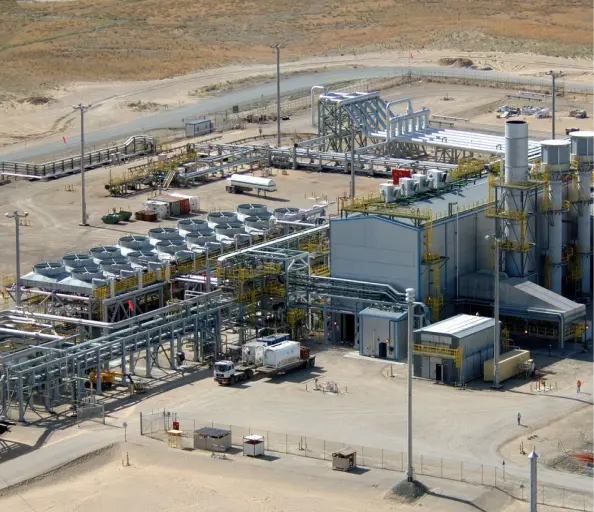
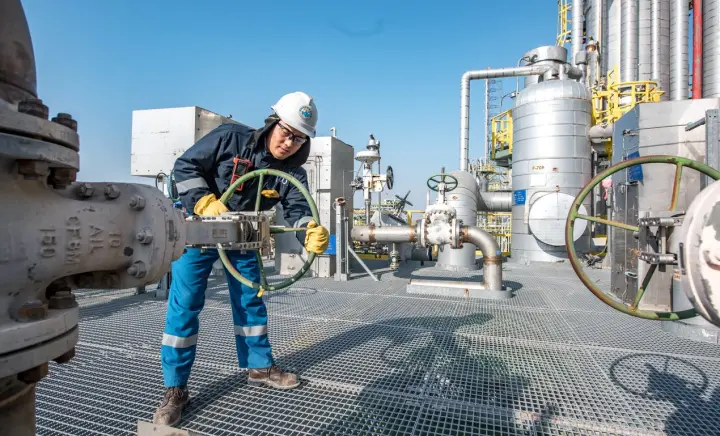
TCO maintains a leading position in the field of industrial safety in terms of such standard indicators as lost working days incidents and the rate of reported incidents.
TCO continues to achieve industry-leading safety results in standard industrial safety measurements such as Serious Incidents and Total Recordable Incidents.
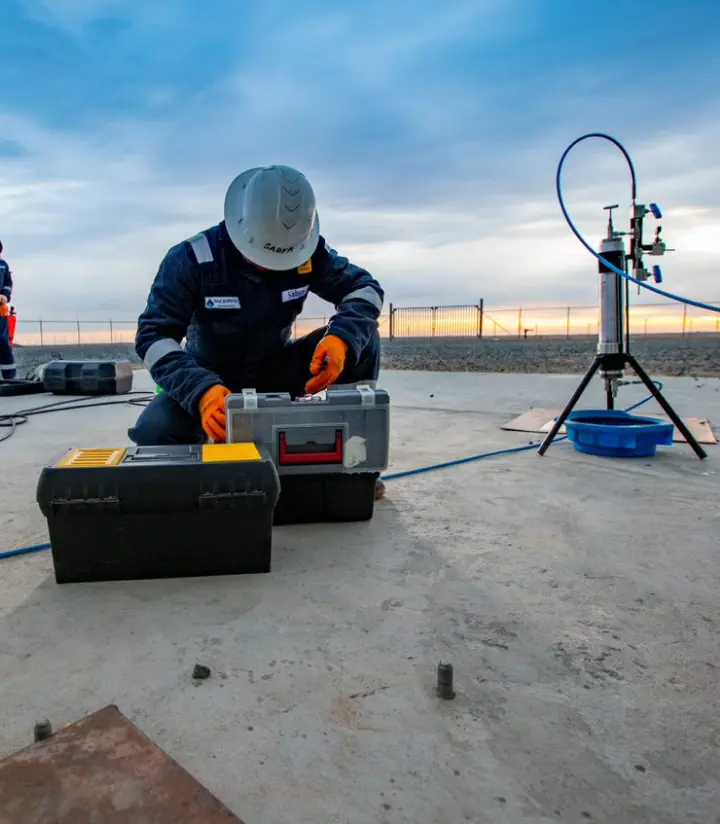
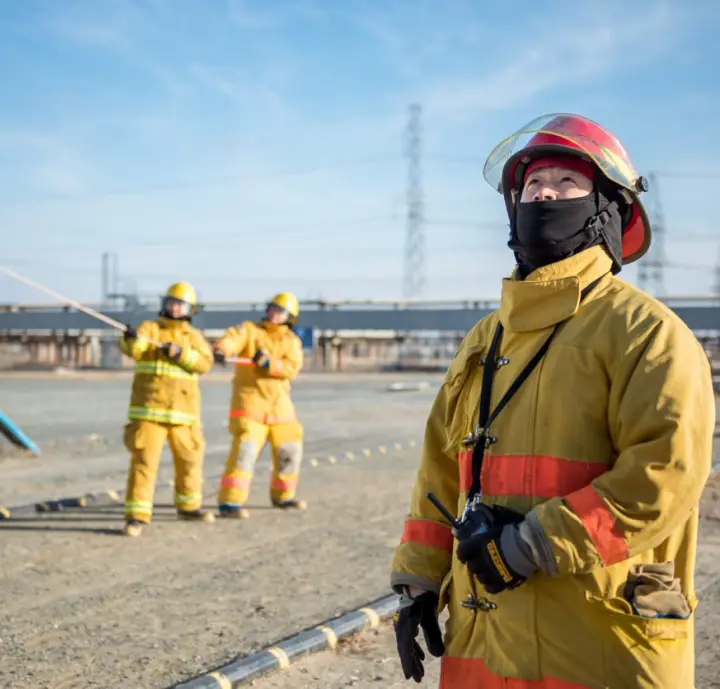
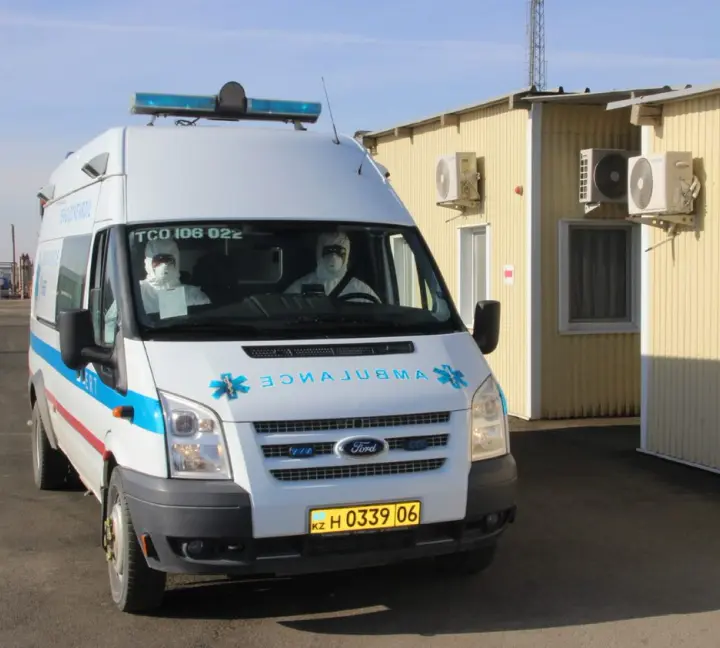
The Contractor Health, Environment and Safety Management Process establishes clear accountabilities, ensures active engagement of contractors, and provides a consistent CHESM program to eliminate health, safety and environment (HSE) incidents and injuries involving contractors.
The requirements and activities included in CHESM process are focused on defining TCO expectations regarding contractor HSE performance, the qualification of contractors and the monitoring of contractor performance against expectations.
Contractors involved in activities presenting risks to workforce and process safety are subject to CHESM Qualification to evaluate HSE Management Systems and ensure adequate safeguards are in place and functioning before starting work at TCO Facilities.
TCO's work is guided by two key principles: do it safely or not at all and there is always time to do it right. Every employee of TCO and its Business Partner companies is responsible for making sure that work can be safely started. Each person has the right to temporarily suspend or completely stop any work if unsafe behavior or conditions are observed. The TCO Safe Work Practices Management Group, together with other teams, ensure that Occupational Safety and Health (OSH) guidelines and procedures are continuously implemented and maintained.
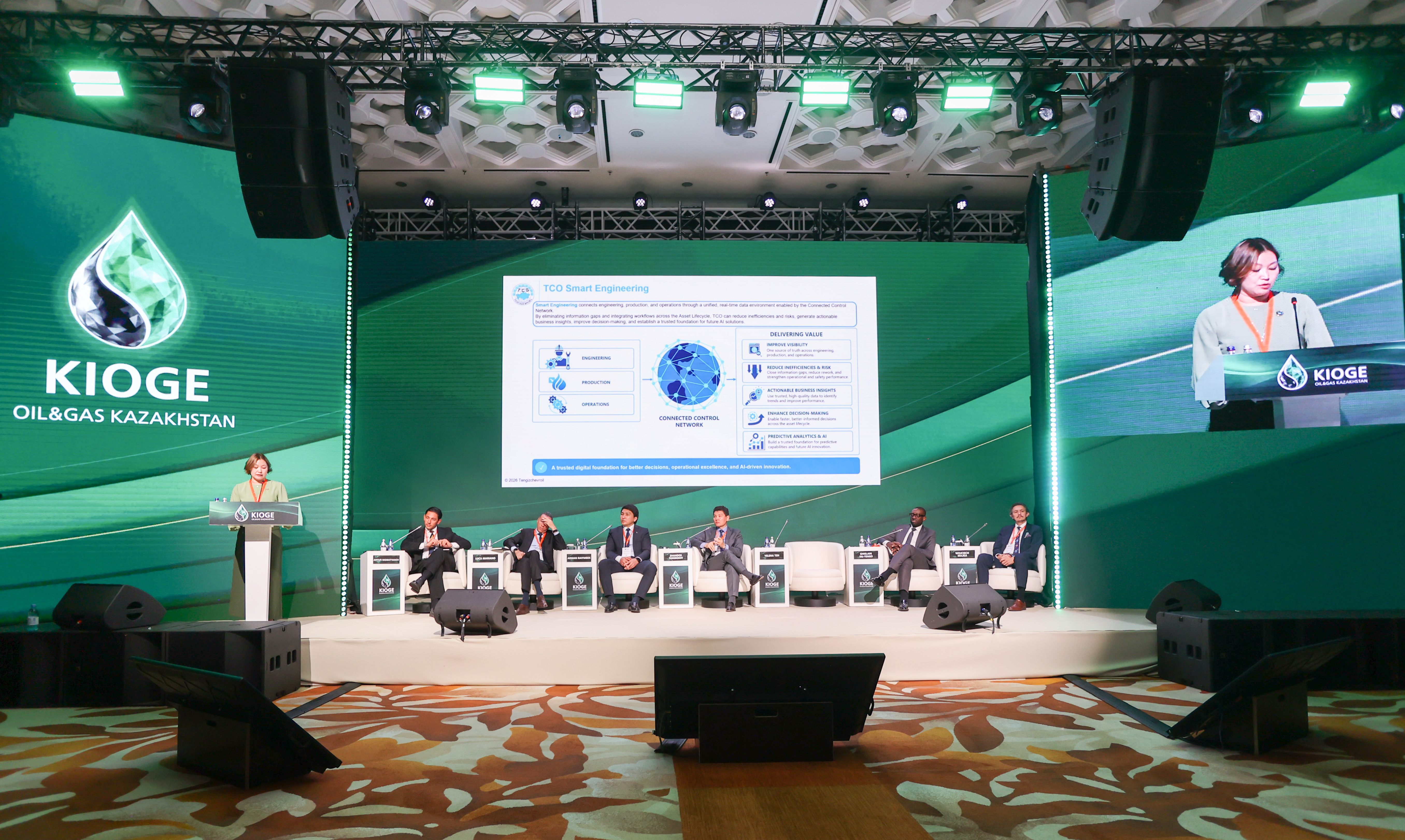
The development of AI and digital technologies continues to drive optimization and improve production efficiency, particularly in the oil and gas industry. At the international oil and gas exhibition and conference KIOGE 2026, Tengizchevroil (TCO) presented its approach to production optimization through Smart Engineering. This approach is based on the integration of data, workflows and digital tools to increase transparency and enhance collaboration between different production functions throughout the asset lifecycle.
Integrated digital engineering or Smart Engineering brings together engineering, production and operational data within a single digital environment, providing specialists with access to up-to-date information in real time. According to Yelena Ten, Digital Technology Consultant at TCO, this approach helps eliminate information gaps between functions and enables faster decision-making. The integrated data network improves the quality of analytics and supports more informed decision-making. It also provides a framework for developing predictive capabilities in reliability, maintenance and operational excellence.
A unified digital environment also provides easier access to information and enables the integration of data from different systems, helping the specialists gain a more comprehensive understanding of the condition and performance of production facilities.
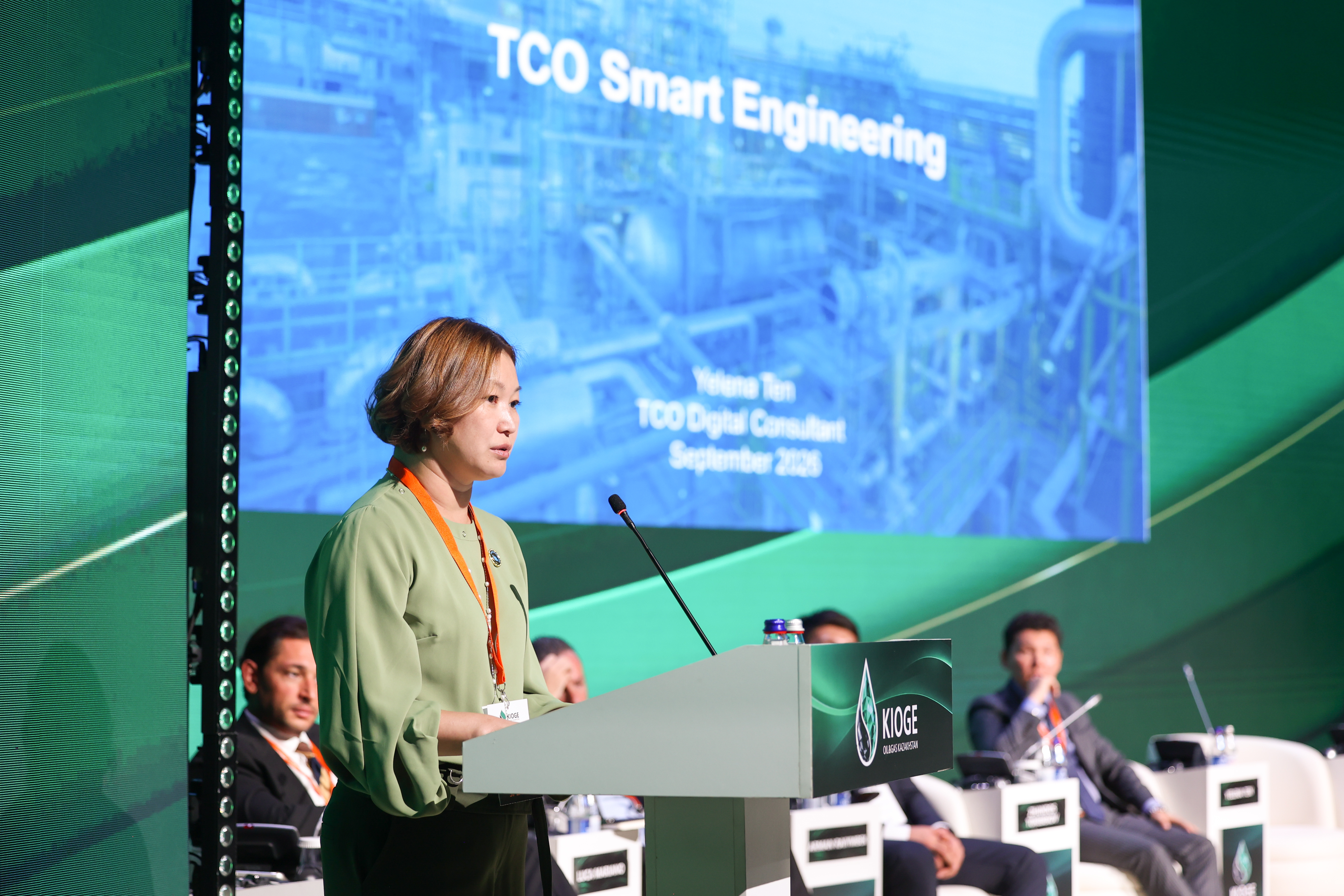
“At TCO, we strive to create an environment where the right information is available to the right people at the right time. This helps us make better decisions, improve the reliability of our production facilities, and build a foundation for new technological opportunities in the future,” said Yelena Ten, TCO Digital Technology Consultant.
One example of this approach is the complete laser scanning of plants, which serves as a core step in the implementation of digital twins. This has become a key factor in ensuring accurate 3D geometry of the assets to create high-precision digital models in the future. Digital twin simulations help optimize processes in a virtual environment, improve resource utilization, simulate various scenarios of equipment operation, and evaluate potential solutions before they are implemented at operating facilities.
As digital solutions continue to evolve, TCO plans to expand its capabilities to manage production facilities more efficiently, improve equipment reliability, and enhance production processes. By creating a unified and reliable information environment, the company is laying the foundation for new solutions that will support the safe and efficient operation of its assets in the future.
The development of Smart Engineering is part of TCO’s ongoing efforts to introduce modern technologies and industry best practices. These efforts support the safe and reliable operation of production facilities, improve business efficiency and foster a culture of continuous improvement.
The development of AI and digital technologies continues to drive optimization and improve production efficiency, particularly in the oil and gas industry. At the international oil and gas exhibition and conference KIOGE 2026, Tengizchevroil (TCO) presented its approach to production optimization through Smart Engineering. This approach is based on the integration of data, workflows and digital tools to increase transparency and enhance collaboration between different production functions throughout the asset lifecycle.
Integrated digital engineering or Smart Engineering brings together engineering, production and operational data within a single digital environment, providing specialists with access to up-to-date information in real time. According to Yelena Ten, Digital Technology Consultant at TCO, this approach helps eliminate information gaps between functions and enables faster decision-making. The integrated data network improves the quality of analytics and supports more informed decision-making. It also provides a framework for developing predictive capabilities in reliability, maintenance and operational excellence.
A unified digital environment also provides easier access to information and enables the integration of data from different systems, helping the specialists gain a more comprehensive understanding of the condition and performance of production facilities.
“At TCO, we strive to create an environment where the right information is available to the right people at the right time. This helps us make better decisions, improve the reliability of our production facilities, and build a foundation for new technological opportunities in the future,” said Yelena Ten, TCO Digital Technology Consultant.
One example of this approach is the complete laser scanning of plants, which serves as a core step in the implementation of digital twins. This has become a key factor in ensuring accurate 3D geometry of the assets to create high-precision digital models in the future. Digital twin simulations help optimize processes in a virtual environment, improve resource utilization, simulate various scenarios of equipment operation, and evaluate potential solutions before they are implemented at operating facilities.
As digital solutions continue to evolve, TCO plans to expand its capabilities to manage production facilities more efficiently, improve equipment reliability, and enhance production processes. By creating a unified and reliable information environment, the company is laying the foundation for new solutions that will support the safe and efficient operation of its assets in the future.
The development of Smart Engineering is part of TCO’s ongoing efforts to introduce modern technologies and industry best practices. These efforts support the safe and reliable operation of production facilities, improve business efficiency and foster a culture of continuous improvement.